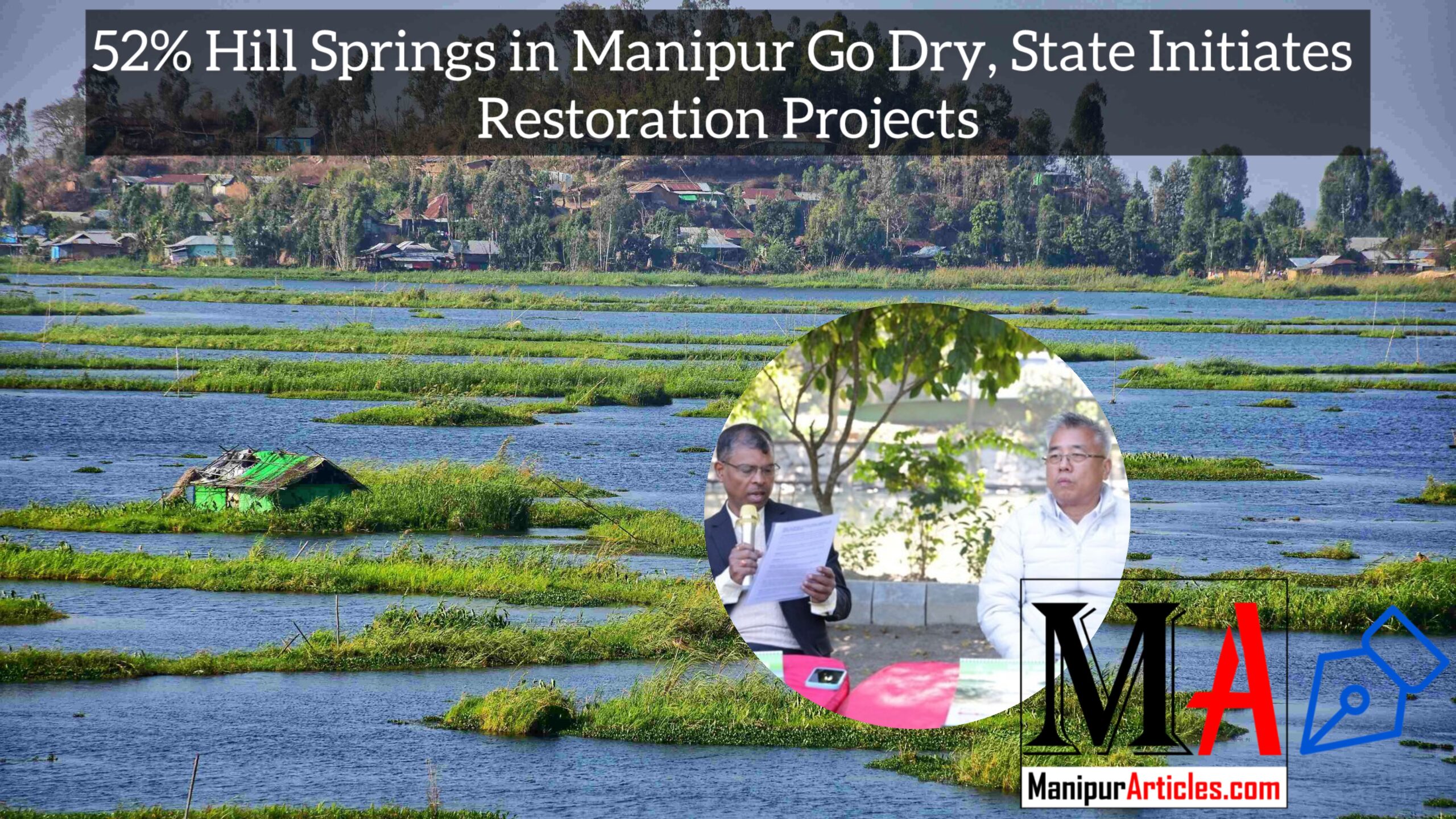
52% Hill Springs in Manipur Go Dry, State Initiates Restoration Projects
Manipur is grappling with an alarming environmental challenge as more than half of its natural hill springs have either dried up or are on the verge of disappearing, raising serious concerns over water security and ecological balance in the state. Official data indicate that nearly 52 per cent of springs in Manipur’s hill districts are no longer functional, a situation that has severely disrupted the state’s hydrological system.
The depletion of these traditional water sources has had far-reaching consequences. Several rivers that once flowed perennially have now become seasonal, intensifying water scarcity in both hill and valley areas. Communities that have depended on springs for generations are facing growing difficulties in accessing drinking water, irrigation, and other daily needs.
Addressing the issue, Arun Kumar Sinha, IAS, Principal Secretary (Forest, Environment & Climate Change), Government of Manipur, said the state government has begun focused interventions to revive drying springs. According to him, the Directorate of Environment & Climate Change has already developed and worked on more than 1,000 springs across Manipur. As part of a pilot initiative, 173 critically affected springs in Ukhrul and Noney districts have been identified for revival through scientific springshed management practices.
Sinha explained that hill springs are particularly vulnerable due to deforestation, unplanned development, and unsustainable land-use practices. Between 2021 and 2025, Manipur reportedly lost nearly 18,000 to 21,000 hectares of forest cover, significantly impacting groundwater recharge and spring sustainability. He stressed that protecting catchment areas and restoring forest cover are essential to reversing the trend.
Highlighting national efforts, he noted that the Government of India has earmarked a budget of Rs 2,700 crore for springshed management across the country, with several projects already underway. These initiatives aim to ensure long-term water security by conserving natural recharge zones and promoting sustainable use of resources.
Sinha warned that unchecked development could further worsen environmental stress, citing examples from other states. He pointed to Shimla, which was originally designed for a population of around 20,000 but now supports over two lakh people, making it environmentally fragile. Similar ecological pressures, including landslides and water shortages, are being witnessed in Uttarakhand and parts of Manipur due to aggressive road construction and shrinking springsheds.
In Manipur, landslides and water scarcity have emerged as major challenges, prompting the government to initiate projects such as the rejuvenation of the Imphal River. Sinha underlined that while government action is crucial, protecting natural resources is a shared responsibility. He called for greater public awareness, afforestation drives, and sustainable livelihood practices that balance development with environmental conservation.
Emphasising the role of the media, he urged journalists and communicators to actively inform citizens about the threats facing water bodies, forests, and ecosystems, as well as the steps being taken to address them. He concluded that safeguarding springs and natural resources today is vital to securing the future of coming generations and ensuring sustainable development in Manipur.