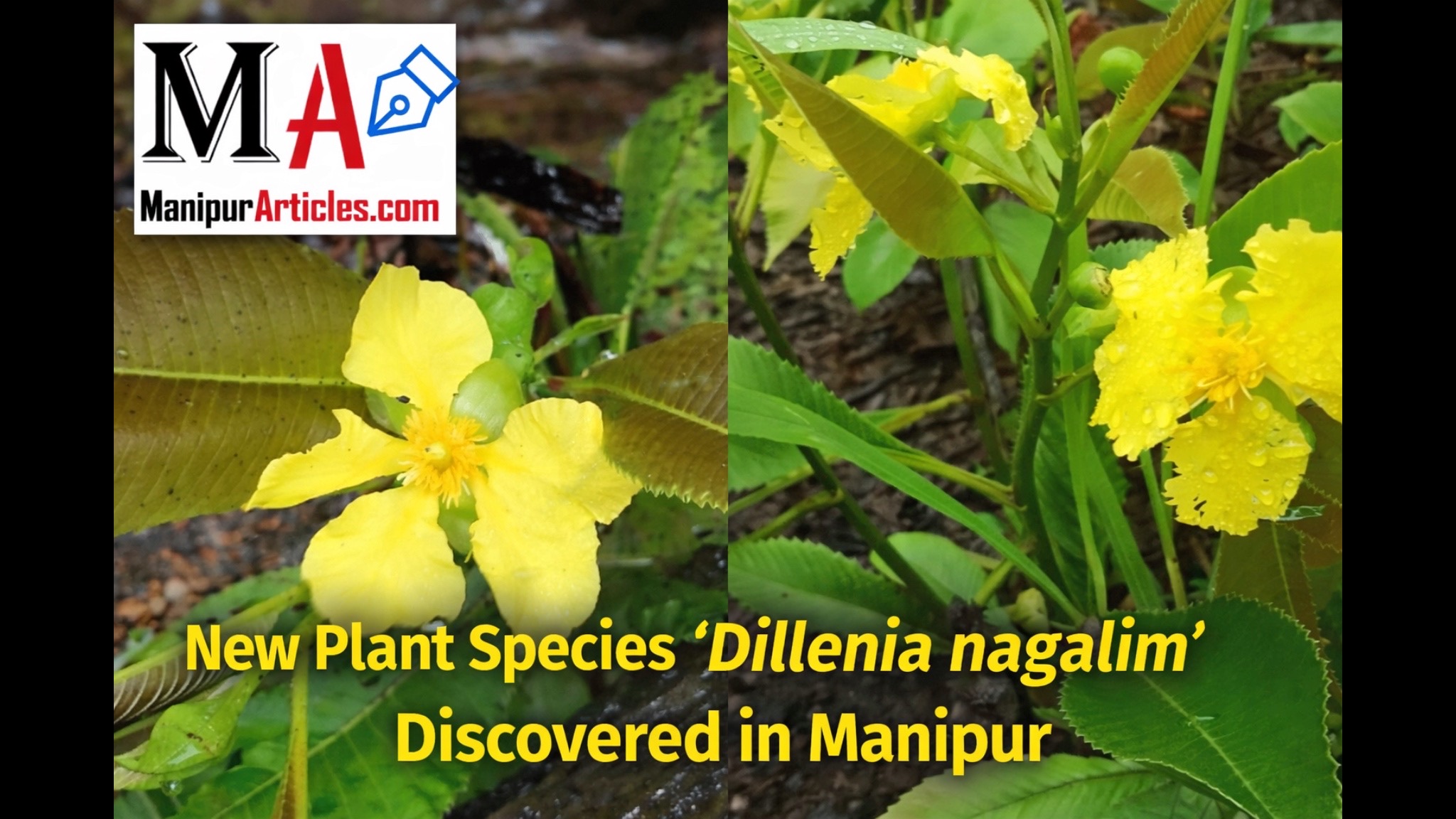
New Plant Species ‘Dillenia nagalim’ Discovered in Manipur
A significant scientific discovery has been made in Kamjong district, where researchers have identified a new plant species named Dillenia nagalim, highlighting the rich biodiversity of Northeast India.
Discovery and Naming
The species was discovered during field surveys conducted between 2024 and 2025 in Choro village near the Indo-Myanmar border. The research team included Sochanngam Kashung, Urikkhimbam Leishilembi, Kholi Kaini, Rachel Sochui Maheo, Tilling Rupa, Gladyso Kashung, Kerene Gangmei, Kreni Lokho, and Kazhuhrii Eshuo.
• The name “nagalim” combines:
• “Naga” – referring to indigenous Naga communities
• “Lim” – meaning land
• It reflects the plant’s origin in areas inhabited by the Tangkhul Naga community
The findings have been officially published in the scientific journal Phytotaxa.
Unique Features of the Plant
• A small shrub growing up to about 1.2 metres
• Produces bright yellow flowers
• Has distinctive double-serrated leaves
• Differs from related species like Dillenia pentagyna and Dillenia hookeri in:
• Shorter height
• Larger flowers
• Greater number of stamens and carpels
Scientific Confirmation
Researchers used a combination of:
• Traditional morphological analysis
• DNA testing using the rbcL gene
This confirmed that the plant is a distinct species within the Dilleniaceae family.
Habitat and Ecology
• Found in open tropical deciduous forests
• Located at altitudes of 250–350 metres
• Flowering season: May to June
• Currently known from only one location, making it endemic
Conservation Concerns
Scientists have provisionally classified the species as Critically Endangered due to:
• Extremely limited distribution
• Increasing human activity and habitat disturbance
• Ongoing land-use changes
Immediate conservation efforts are needed to protect this rare species.
Local Importance
• Local communities already recognize the plant
• Tender leaves are used as vegetables
• Fruits are edible, described as having a sweet and pungent taste
Broader Significance
The discovery reinforces the ecological importance of the Indo-Burma biodiversity hotspot, suggesting that:
• Many species in the region remain undocumented
• There is an urgent need for research and conservation
⸻
This finding not only adds to scientific knowledge but also emphasizes the need to preserve Manipur’s fragile ecosystems for future generations.