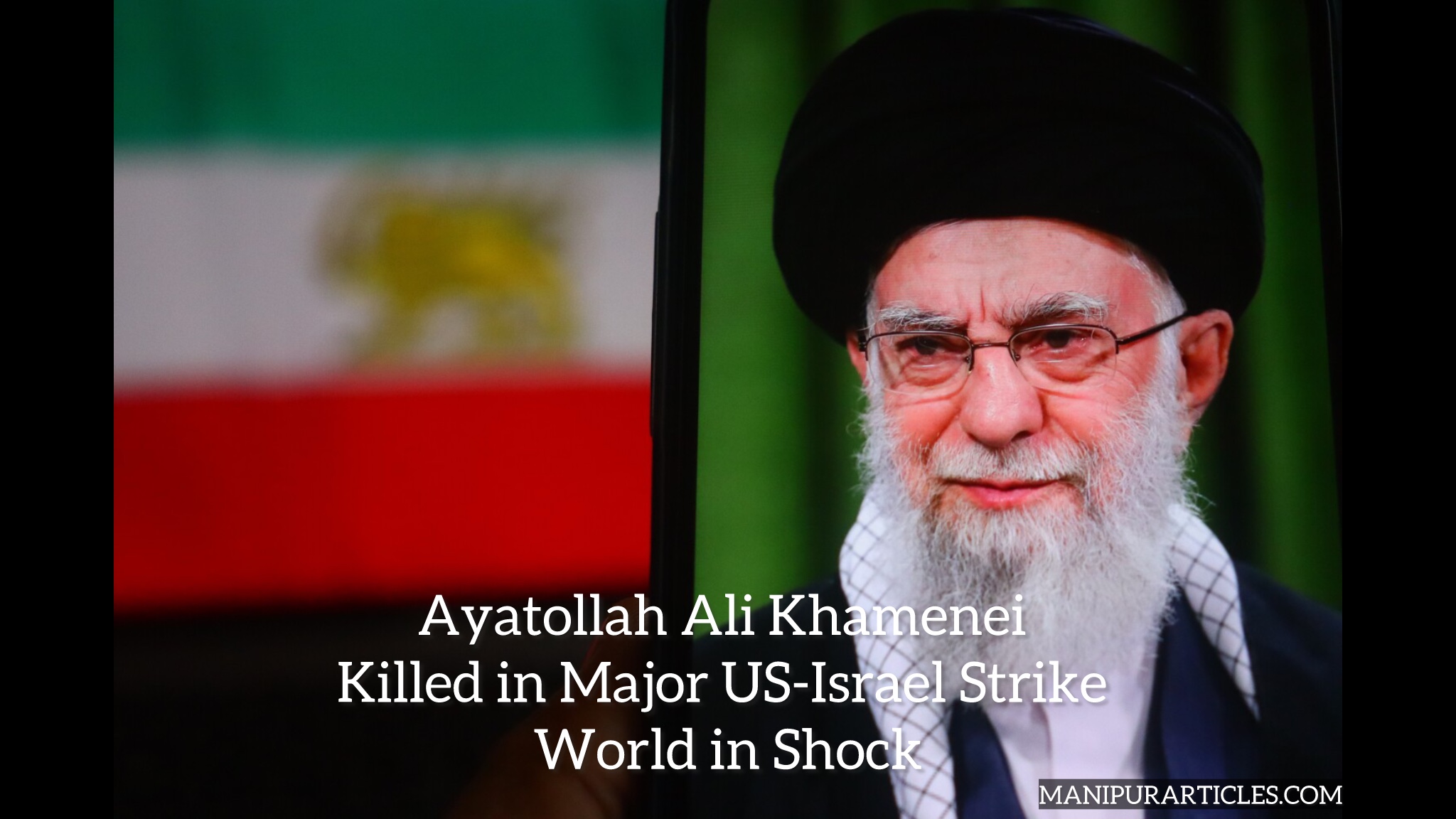
Ayatollah Ali Khamenei Killed in Major US-Israel Strike World in Shock
Tehran / Washington / Jerusalem — March 1, 2026:
In an extraordinary and unprecedented escalation of military conflict, Iran’s Supreme Leader Ayatollah Ali Khamenei has been confirmed dead following coordinated air and missile strikes by the United States and Israel. Iranian state media, including state television and official news agencies, announced the death early on Sunday, triggering a 40-day national mourning period and massive geopolitical repercussions.
Khamenei’s Death Confirmed
Iranian authorities confirmed that Ayatollah Ali Khamenei, 86, who led the Islamic Republic since 1989, was killed late on Saturday in a targeted operation that struck his compound in Tehran. The joint U.S.–Israeli military campaign reportedly hit multiple high-level leadership and military targets in the Iranian capital and elsewhere.
Shortly after the strikes, U.S. President Donald Trump posted on his social platform that Khamenei “was one of the most evil people in history” and had been eliminated in the operation. Israeli Prime Minister Benjamin Netanyahu said there were “many signs that Khamenei is no longer alive”.
Iran’s state television broadcast news of his death, declaring 40 days of official mourning and an additional seven days of public holiday. State outlets described the supreme leader as a “martyr”, while footage showed Iranians visibly grief-stricken in public spaces.
Who Khamenei Was
Ayatollah Ali Khamenei succeeded Ayatollah Ruhollah Khomeini — the founder of the Islamic Republic — in 1989 to become Iran’s second Supreme Leader. As the ultimate authority over the government, the military and judiciary, he was central to shaping Iran’s political and ideological trajectory for more than three decades.
Over his tenure, Khamenei consolidated power, oversaw a forceful suppression of domestic dissent, and expanded Iran’s influence through external proxy forces like Hezbollah and Houthi factions. He maintained a harshly anti-Western stance, rejecting many diplomatic overtures even as protests, sanctions, and economic crises mounted internally.
The Military Operation
The strikes were part of a major U.S.–Israeli military offensive that targeted strategic and leadership sites across Iran — including missile bases, nuclear infrastructure, defence systems, and senior commanders of the Islamic Revolutionary Guard Corps (IRGC). Reports suggest hundreds of targets and wide deployment of aircraft and precision missiles.
Iranian state sources said that several senior commanders and close aides of Khamenei, and even members of his family, were also killed in the strikes. The IRGC has vowed severe retaliation.
Aftermath and Retaliation
Within hours of the announcement:
- Iran launched waves of ballistic missiles and drones at U.S. and Israeli positions across the Middle East, including Gulf states.
- Iranian allies and militia groups in the region also engaged in counter-attacks.
- Airspace in parts of the Gulf was temporarily closed, and civilian flights were disrupted amid security fears.
Iranian President Masoud Pezeshkian labelled revenge for Khamenei’s death a “legitimate duty and right” and warned of ongoing retaliation, signalling the likelihood of sustained conflict.
Leadership Vacuum in Tehran
Khamenei’s death creates an immediate and fraught leadership crisis in Iran. Under Iran’s constitution, a panel of senior clerics known as the Assembly of Experts is responsible for choosing the next Supreme Leader — but with the country in wartime conditions, succession could be contested, potentially empowering military or doctrinal hardliners such as elements of the IRGC.
Global Reactions and Risks
World leaders have urged caution even as tensions escalate:
- Russia and China criticised the strikes, calling on both sides to de-escalate.
- At the United Nations, Iran’s delegate labelled the operation a “war crime”.
- Western governments expressed concern over rising instability in the already volatile Middle East.
Markets reacted sharply, with global energy prices spiking amid fears of instability near the crucial Strait of Hormuz, through which a significant portion of the world’s oil supply travels.
Historical Significance
Khamenei’s death marks one of the most consequential events in Middle Eastern geopolitics in decades:
- It ends a leadership era of over 36 years in Tehran.
- It could reshape Iran’s internal power structures, foreign policy, and relations with the U.S., Israel and the broader region.
- It risks escalating the conflict beyond the current theatres, with implications for global security and energy markets.
Analysis: What Khamenei’s Death Means for the Region and World
The removal of Iran’s top authority figure in a direct military strike has stunned diplomatic circles and analysts worldwide. Khamenei was more than a national leader — he was the ideological and operational head of Iran’s establishment and its regional networks.
Geopolitical Shift
Khamenei’s death shifts power dynamics not only in Iran but across the Middle East. It weakens a long-standing pillar of Iran’s political continuum and may embolden opposition factions domestically while also galvanising nationalist sentiment. Threats of retaliatory attacks from Iran and allied groups have already unfolded, affecting regional stability.
Leadership Uncertainty
Without a clear successor, Iran may see:
- A transition led by conservative clerics aligned with the IRGC
- Internal competition among religious elites
- Potential grassroots or youth-driven movements for change
The lack of clear succession planning deepens uncertainty and could fracture elite consensus on governing strategy.
Global Security Implications
The strikes and subsequent retaliation elevate the risk of:
- Broader conflict involving proxy engagements across the Middle East
- Clashes between Iran and Western forces directly
- Disruptions to global energy supply chains
Diplomats have stepped up appeals for de-escalation, but with hostilities ongoing, the war could widen if containment efforts fail.
Human and Civil Impact
Beyond geopolitics, the strikes and counter-strikes have already resulted in civilian casualties and infrastructural damage across several provinces in Iran. Mourning and public mobilisation at funerals and memorials reflect both personal grief and political rallying.
Timeline: How Events Unfolded
- February 28, 2026: Major coordinated U.S.–Israeli airstrike campaign begins targeting Iranian leadership and military infrastructure.
- February 28 Evening: Israeli and U.S. officials indicate strong signs of Khamenei’s death in the strikes.
- March 1, 2026: Iranian state media confirms Khamenei’s death and announces national mourning.
- Same Day: Iran launches retaliatory missile and drone attacks at U.S. and Israeli interests; regional hostilities intensify.
Key Takeaways
- Ayatollah Ali Khamenei is confirmed dead following a joint U.S.–Israeli military operation — a watershed moment with vast implications.
- Iran is in mourning and retaliation mode, with prolonged tensions expected.
- Leadership succession will be a critical test for Iran’s political and religious establishment.
- Global security and energy dynamics are significantly affected, increasing volatility and diplomatic strain.