Manipur: Ekou Village IDPs Return ₹24 Lakh, Reject ‘Inadequate’ Housing Aid
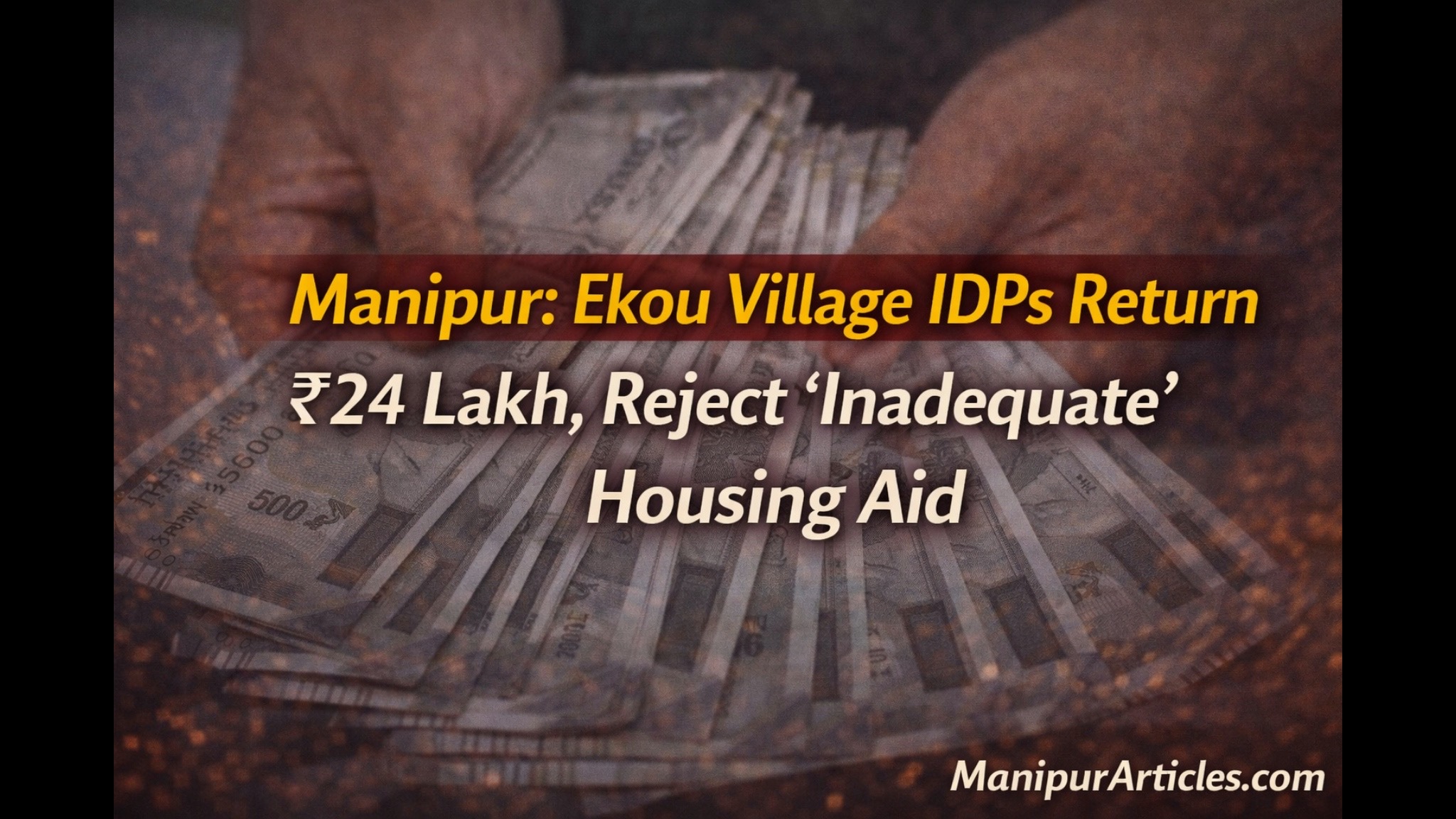
In a strong expression of dissatisfaction, internally displaced persons (IDPs) from Ekou village have returned ₹24 lakh in cash to authorities, rejecting government assistance meant for rebuilding their homes.
Protest and Return of Funds
The displaced residents, currently living in relief camps at Sajiwa and Sawombung, marched to a government office and handed over the amount to the Sawombung Junior Block Development Officer (BDO).
• The return of funds was carried out collectively and publicly
• The act was accompanied by protests against the rehabilitation package
• It reflects growing frustration among displaced families
Why the IDPs Rejected the Aid
The Manipur government’s rehabilitation scheme provides:
• ₹3 lakh per family for house reconstruction
• ₹1.30 lakh under Pradhan Mantri Awas Yojana – Gramin
• ₹1.70 lakh from the State Home Department
• An initial instalment of ₹48,000 via Direct Benefit Transfer (DBT)
However, the affected residents have termed the amount “inadequate” for rebuilding homes destroyed during the violence.
One of the displaced persons, Longjam Basanta, stated that:
• They had already requested authorities not to transfer the funds
• The assistance was insufficient for actual construction costs
• The package was perceived as an attempt to downplay the scale of loss
Background: Displacement and Damage
Ekou village, located near the foothills bordering Kangpokpi district, was among the worst-affected areas during the ethnic violence.
• Most residents, largely from the Meitei community, were forced to flee
• Homes were damaged or destroyed
• Families have been living in relief camps for months
Government’s Rehabilitation Efforts
According to officials:
• Over 3,700 families (around 16,500 individuals) have been resettled across Manipur
• Financial aid is being provided to support housing reconstruction and rehabilitation
However, the situation in Ekou highlights gaps between policy and ground reality, particularly regarding:
• Actual cost of rebuilding homes
• Trust deficit between affected communities and authorities
• Need for more comprehensive and flexible rehabilitation plans
Larger Implications
The rejection of aid by Ekou IDPs raises important concerns:
• Whether current compensation packages are realistic and sufficient
• The importance of consulting affected communities before implementing schemes
• The urgency of ensuring dignified and sustainable resettlement
⸻
This development underscores the continuing challenges in post-conflict rehabilitation in Manipur, where restoring homes also requires rebuilding trust, security, and confidence among displaced communities.