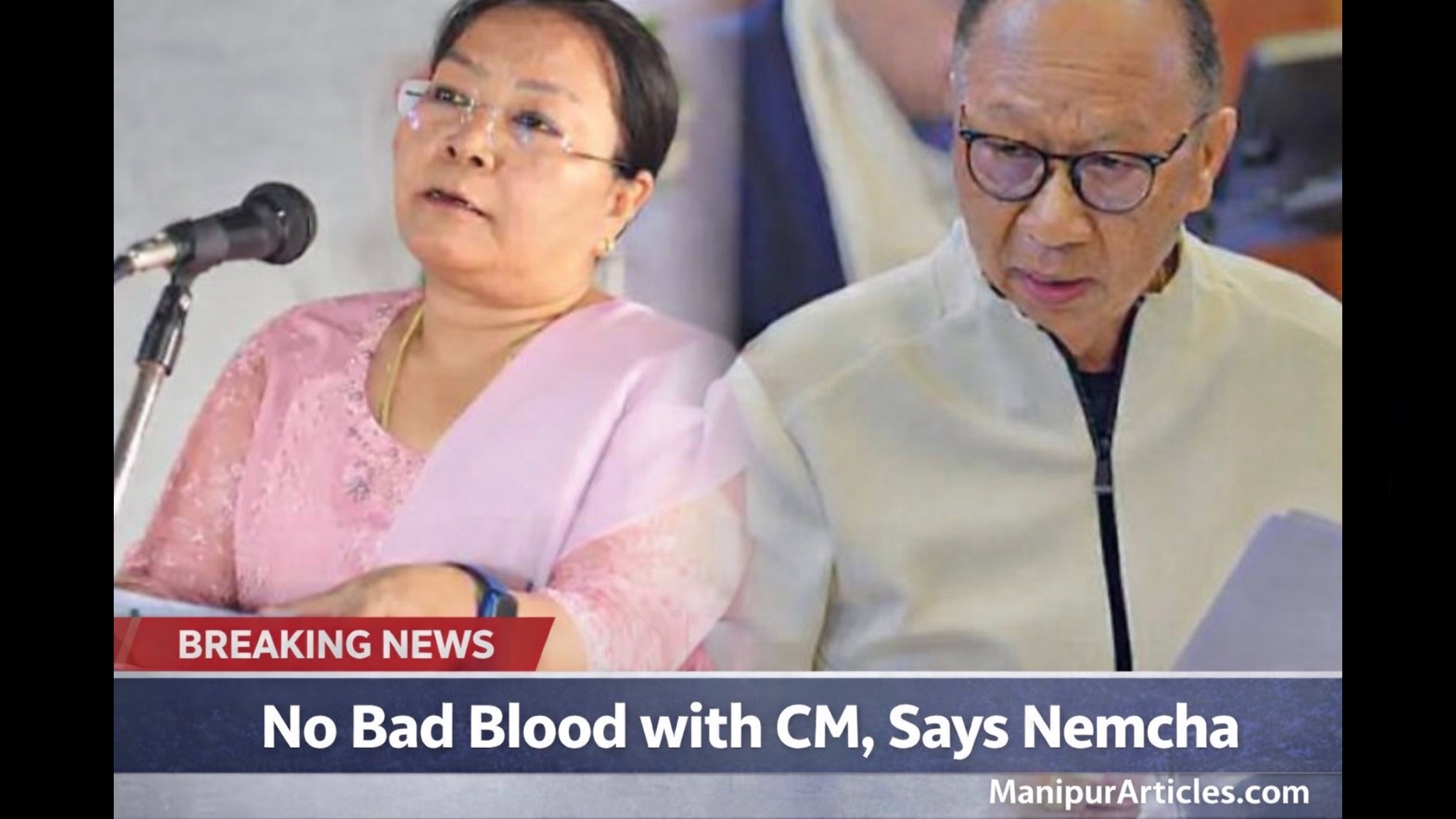
No Bad Blood with CM, Says Nemcha
Manipur Deputy Chief Minister Nemcha Kipgen has emphasised dialogue, reconciliation and inclusive governance as essential pathways to restoring peace in the state. She stated that Chief Minister Yumnam Khemchand Singh does not harbour ill feelings toward any community and remains committed to rebuilding trust across ethnic lines.
Rebuilding Confidence Beyond Infrastructure
Kipgen said that rebuilding Manipur must go beyond physical infrastructure and focus on restoring confidence, dignity and hope among affected populations. She highlighted that women, children and elderly persons constitute the majority of displaced people, adding that her role as a woman leader carries a responsibility to represent their concerns in governance.
Stressing unity among Meetei, Kuki and Naga communities, she said she represents tribal communities collectively and does not believe in dividing people along ethnic lines. Integration, she noted, remains essential for effective governance and lasting peace.
She added that while security concerns have limited her movement in certain areas, the Chief Minister personally engages with communities she cannot visit.
Political Solution Essential
Addressing reports of violence in hill districts following her appointment, Kipgen described the situation as unfortunate and underscored the need for a political solution. She maintained that joining the government was necessary because negotiations and peace-building efforts cannot bypass the state administration.
“The Centre alone cannot resolve the crisis,” she said, adding that her participation in government remains crucial despite her inability to physically attend Assembly sessions at present.
Relief, Rehabilitation and Coordination
On personal security, Kipgen stated that she has been provided adequate protection but remains guided by faith and commitment to public service. She expressed confidence that an amicable political solution would eventually allow free movement and rebuilding of inter-community trust.
Sharing her experience working with displaced families, Kipgen said she personally assisted survivors who fled violence, arranging food, clothing and blankets—often from her own resources. She recalled displaced women and children requesting basic nutritional food, reflecting the humanitarian distress in relief camps.
She said she addressed these issues by coordinating with district authorities to improve supply arrangements and ensure safe drinking water and food availability. Relief efforts were strengthened during visits by the Governor and through coordination with government agencies.
The Deputy Chief Minister further stated that she raised concerns with the Union Home Minister and held discussions with neighbouring states, including Nagaland, which extended medical and relief assistance. Funds sanctioned for pre-fabricated housing for internally displaced persons (IDPs), following assurances during visits to Kangpokpi, have been distributed free of cost.
She added that she personally monitored relief distribution to prevent misuse. According to her, several displaced families have begun returning to their original homes after government assessments of damaged areas.
Women’s Representation in Governance
Describing her appointment as a milestone for women’s representation, Kipgen said women leaders play a vital role in understanding the social impact of conflict and addressing grassroots challenges.
She reiterated her belief in constructive politics and service-oriented leadership, expressing optimism that peace will return if governance continues to prioritise sincerity, inclusiveness and public welfare.
“Sustained public support and honest political engagement are key to achieving long-term stability in the state,” she concluded.