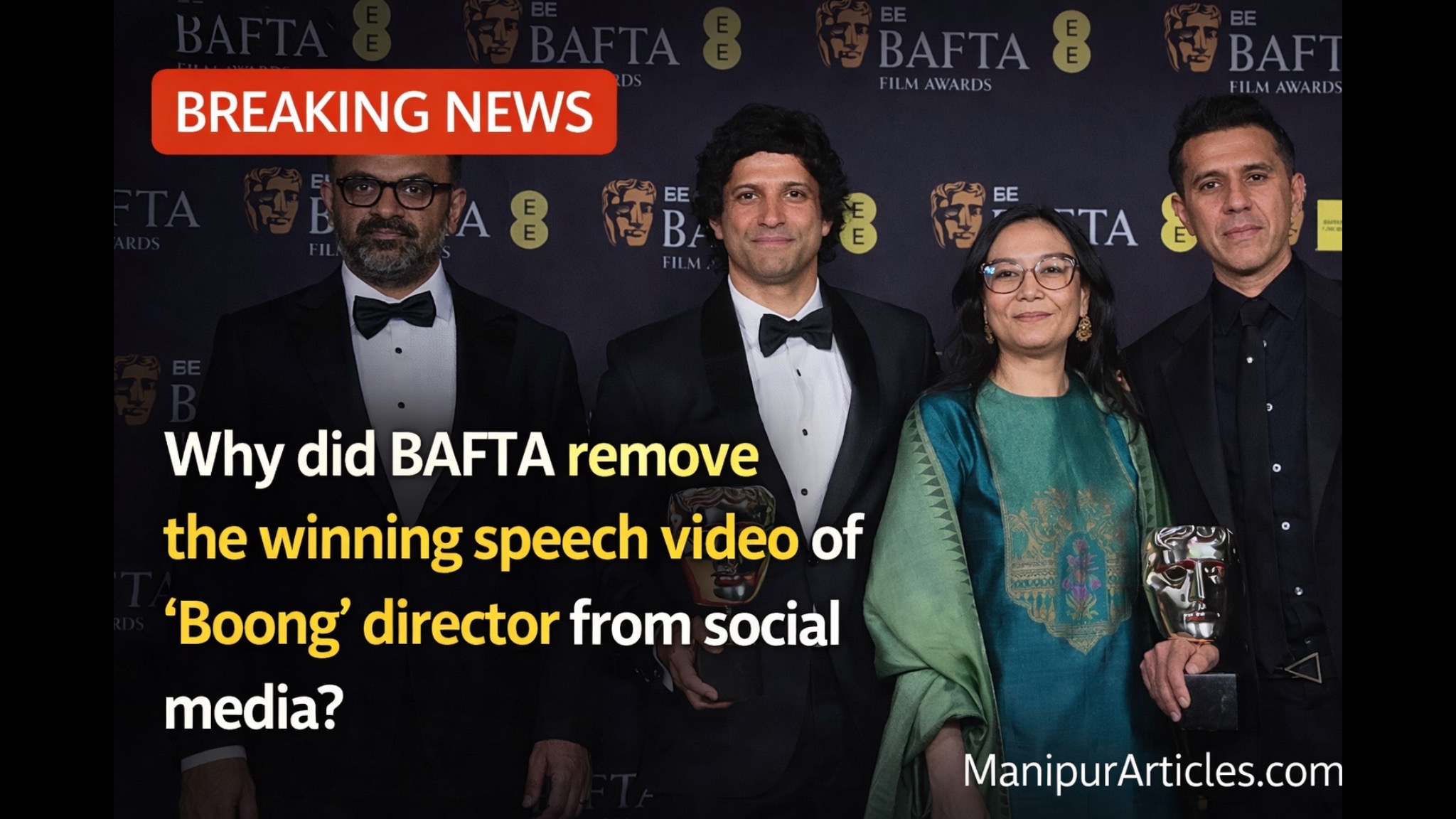
Why did BAFTA remove the winning speech video of ‘Boong’ director from social media?
The British Academy of Film and Television Arts (BAFTA) is facing criticism after removing the acceptance speech of Manipuri filmmaker Lakshmipriya Devi from its official social media platforms, days after her film Boong made history at the BAFTA Awards.
As of now, BAFTA has not issued any official explanation for the removal. However, the controversy has sparked debate over possible reasons and broader concerns around representation and free expression.
⸻
What Happened?
On February 22, Boong, a Manipuri-language film, became the first Indian film to win in the Best Children’s & Family Film category at the BAFTA Awards. The win was widely celebrated across India, especially in Manipur.
During her acceptance speech, Lakshmipriya Devi:
• Described Manipur as “very troubled, ignored and very under-represented in India.”
• Referred to the ongoing ethnic violence in the state since 2023.
• Dedicated the award to the people of Manipur.
• Expressed hope that internally displaced children would regain “joy, innocence, and dreams.”
Within days, the video of her speech was removed from BAFTA’s official X (formerly Twitter) and Instagram accounts. The deletion was noticed by viewers and soon went viral.
⸻
Why Was the Speech Removed?
Since BAFTA has not clarified the decision, the reasons remain speculative. However, observers have suggested several possibilities:
1 Political Sensitivity
The speech directly referenced ethnic violence and displacement in Manipur. International award bodies sometimes avoid hosting content perceived as politically sensitive, particularly when it relates to ongoing conflicts.
2 Platform or Content Moderation Policies
There is a possibility that the removal was related to internal content policies or moderation decisions, though no guideline violation has been publicly cited.
3 External Pressure (Unconfirmed)
Some critics speculate about possible diplomatic or political pressure, though there is no verified evidence supporting this claim.
Without a statement from BAFTA, these remain interpretations rather than confirmed reasons.
⸻
Public Reaction
The removal has been described by critics as an act of “cultural erasure.”
Among the most vocal critics was social activist Binalakshmi Nepram, who publicly questioned BAFTA’s decision, stating that removing the speech amounted to erasing Indigenous and women’s voices.
Artists, activists, and netizens have since demanded:
• Immediate reinstatement of the speech video
• A public clarification from BAFTA
• Greater transparency in handling politically sensitive content
The issue has expanded into a broader discussion about:
• Representation of marginalized communities
• Freedom of expression at global cultural platforms
• The responsibility of international institutions that claim to champion diversity and inclusion
⸻
Why This Matters
For many in Manipur, the win was more than a cinematic milestone — it symbolized recognition of Indigenous storytelling from a region often underrepresented in mainstream Indian and global media.
The controversy has cast a shadow over that achievement, raising uncomfortable questions:
• Who decides which narratives are acceptable on global stages?
• Can award platforms celebrate diversity while limiting politically contextual voices?
• Does removing such content undermine the very inclusion these institutions promote?
⸻
Current Status
As criticism intensifies, BAFTA has yet to release a formal explanation. Until an official statement is made, the exact reason for the removal remains unclear.