Manipur Plants 10,000 Saplings in Langol Forest Using Miyawaki Technique
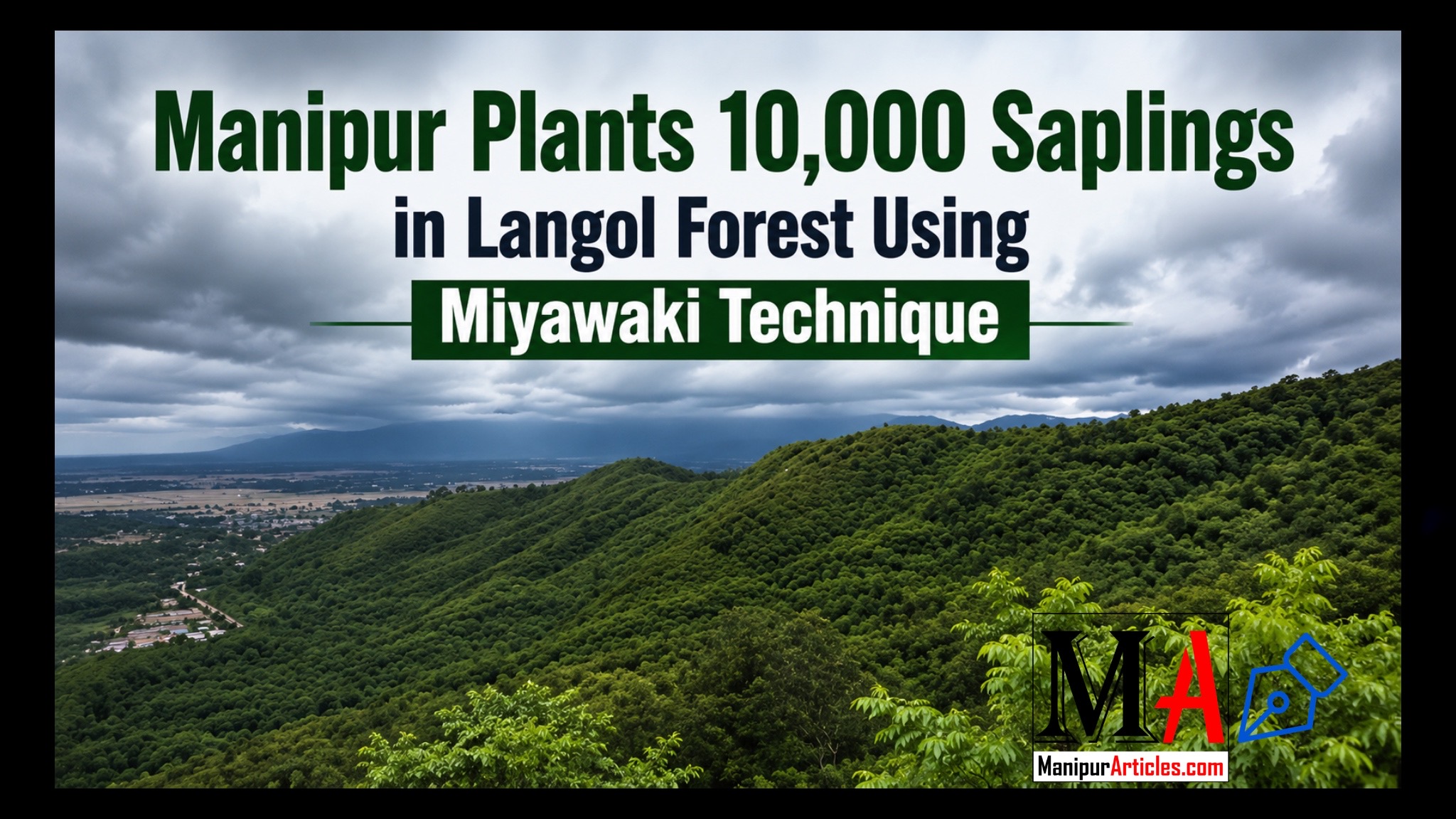
The Manipur Government has launched a major ecological restoration initiative in the Langol Reserve Forest by planting 10,000 native saplings using the scientifically advanced Miyawaki plantation method.
The project has been undertaken by the Central Forest Division in Compartment No. 2 of the Langol Reserve Forest located in the Lamdeng Block under the Sadar West Range. The initiative aims to restore degraded forest land, improve biodiversity, and support the state’s long-term environmental sustainability goals under the “Greening Imphal” vision.
The plantation programme follows the Miyawaki technique developed by renowned Japanese botanist Akira Miyawaki. Unlike traditional afforestation methods, the Miyawaki approach involves planting three to four indigenous saplings per square metre in a dense and multi-layered pattern. This process promotes faster plant growth, stronger root systems, and quicker forest regeneration.
Forest officials stated that extensive soil preparation was carried out before plantation, including aeration and the addition of organic biomass to improve soil fertility, moisture retention, and microbial activity. The objective is to create a self-sustaining mini-forest ecosystem capable of naturally supporting long-term ecological balance.
The plantation site includes a diverse range of indigenous species. Canopy-level trees such as Terminalia myriocarpa, Gmelina arborea, and Parkia have been planted alongside mid-level species including Syzygium cumini and Citrus limon. Herbs, shrubs, and climbers were also introduced to ensure structural and ecological diversity within the forest area.
Officials reported that within just one year of plantation, the site has already shown encouraging growth and a high survival rate among saplings, reflecting the effectiveness of the Miyawaki method in restoring degraded land.
Apart from improving biodiversity and strengthening climate resilience, the project is also expected to enhance the scenic environment around Imphal city. Authorities believe the development of dense peri-urban forests could support eco-tourism and complement the region’s growing tourism potential.
The initiative is being viewed as an important step toward increasing green cover in and around Imphal while promoting sustainable urban development and environmental conservation in the state.