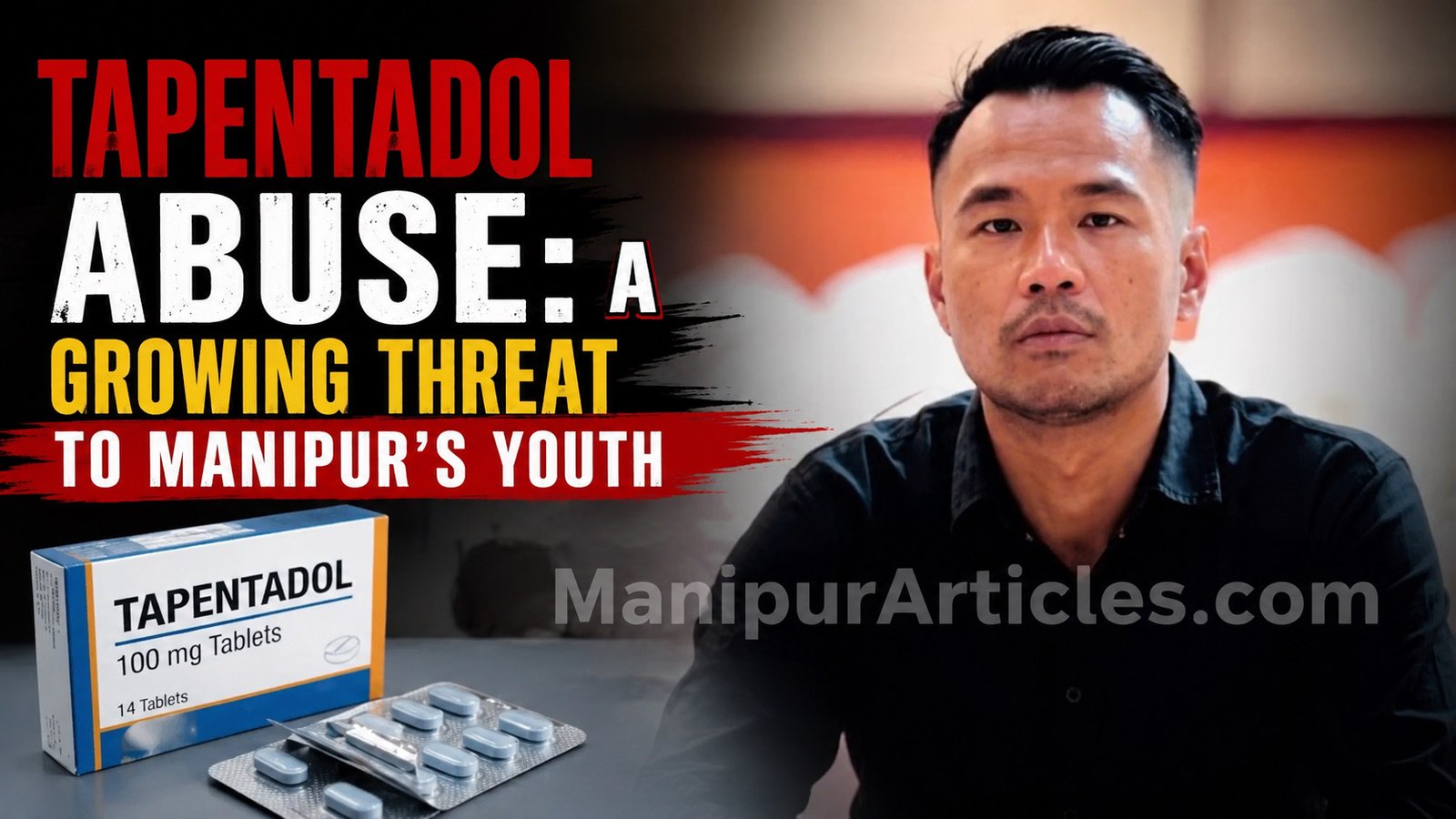
Tapentadol Abuse: A Growing Threat to Manipur’s Youth
By Mansoor Sharma
Manipur has witnessed several phases of substance abuse over the years, with heroin and pharmaceutical drugs causing serious damage to the state’s youth. While heroin has remained a major drug of abuse since the late 1980s, the misuse of prescription medicines has increasingly emerged as another serious public health concern.
The state had already experienced the devastating spread of Spasmo-Proxyvon abuse during the early 2000s, leading to widespread drug dependence, health complications, drug-related crimes, overdose cases and severe injection-related infections.
Today, a similar concern is emerging with the increasing misuse of Tapentadol, commonly sold under brand names such as Tydol.
What Is Tapentadol?
Tapentadol is a synthetic opioid painkiller prescribed for moderate to severe pain. It works through two mechanisms: activating μ-opioid receptors in the central nervous system and increasing noradrenaline activity, which helps reduce the perception of pain.
The medicine is available in different strengths, including 50 mg, 100 mg, 150 mg and 200 mg. Although it has legitimate medical uses for conditions such as musculoskeletal and neuropathic pain, its misuse can lead to dependence and serious health consequences.
The growing availability of Tapentadol has become particularly concerning because some users have begun taking the medicine for non-medical purposes, including crushing tablets for injection.
Heroin Users Turning to Tapentadol
The rise in Tapentadol misuse has been linked to the changing drug market in Manipur. During the 2023–2024 crisis, the price of heroin reportedly increased substantially, making it unaffordable for many users.
As a cheaper and more accessible alternative, Tapentadol began attracting people who were already dependent on opioids. This shift has contributed to an increasing number of Tapentadol-related dependency cases being seen at treatment facilities.
The problem is not limited to men. Treatment centres have also reported dependency among women, with cases ranging from moderate to severe.
Severe Withdrawal Symptoms
Tapentadol dependence can result in significant withdrawal symptoms when regular use is stopped. Symptoms may begin within several hours and can include:
- Runny nose and excessive yawning
- Fever and chills
- Severe body and muscle pain
- Muscle cramps
- Nausea, vomiting and diarrhoea
- Dehydration
- Anxiety and agitation
- High blood pressure
- Insomnia
- Extreme weakness
Withdrawal may last for several days, while severe cases can continue for considerably longer.
Injection Abuse Creates Additional Health Risks
The dangers become even more serious when Tapentadol tablets are injected. Injection drug use already contributes to the spread of HIV, hepatitis C (HCV) and hepatitis B (HBV) through needle-sharing practices.
Repeated injections can also cause swelling, abscesses and serious infections at injection sites. In complicated cases, patients may develop cellulitis, ulcers and myiasis, requiring urgent medical treatment.
These complications place an additional burden on individuals, families and the healthcare system.
Rising Tapentadol Dependence Cases
Available research highlights the growing concern surrounding Tapentadol use. Between January 2017 and January 2023, 933 cases of opioid use disorder were recorded in the study, including 228 patients who identified Tapentadol as their primary drug of use.
The number of Tapentadol-related cases increased from 14 in 2017 to 87 in 2022, despite a temporary decline during the COVID-19 restrictions.
These figures indicate the need for closer monitoring and stronger intervention before the problem expands further.
Need for Stronger Action
The growing misuse of Tapentadol requires coordinated action from healthcare professionals, treatment centres, government agencies, NGOs and community-based organisations.
There is an urgent need for:
- More research into Tapentadol dependence in Manipur
- Better collection of data on misuse and treatment outcomes
- Public awareness programmes on the dangers of pharmaceutical opioid abuse
- Evidence-based withdrawal and rehabilitation services
- Stronger monitoring of the sale and procurement of the medicine
- Properly equipped and adequately staffed drug-treatment centres
- Greater cooperation between healthcare professionals, NGOs and community organisations
Tapentadol is a legitimate medicine when used under appropriate medical supervision, but its non-medical use can result in dependence, withdrawal and serious health complications.
Manipur has already experienced the devastating consequences of pharmaceutical drug abuse in the past. The growing misuse of Tapentadol should therefore be treated as an emerging public health threat, requiring timely intervention before it develops into another widespread drug epidemic.
The writer is a counsellor at Vision Of Hope, TRUST Centre, Khonghampat.