Manipur CM’s Resignation: Long Overdue, Says Priyanka Gandhi – An In-Depth Analysis
Summary
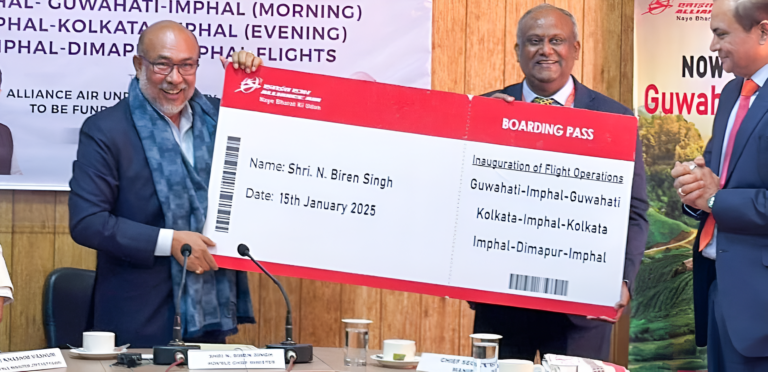
In a striking statement that has ignited political debate across the Northeast, Priyanka Gandhi has declared that the resignation of the Manipur Chief Minister was “long overdue.” Her comment, loaded with political implications, comes amid a turbulent political climate and rising public dissatisfaction in the state. This article delves into the background and context of the resignation, examines Priyanka Gandhi’s remarks, and explores the broader impact on Manipur’s political landscape and governance. We’ll unpack the events leading up to this moment, discuss the reactions from various stakeholders, and consider what the future might hold for Manipur politics.
In-Depth Article
Introduction
Have you ever stopped to wonder how a single political decision can send ripples through an entire state? Well, the recent resignation of the Manipur Chief Minister has done just that. In a powerful and thought-provoking statement, Priyanka Gandhi asserted that the resignation was not only justified but had been long overdue. For those who follow Indian politics, especially in the dynamic northeastern region, this declaration is like a sudden gust of wind that has stirred up a storm of debates and discussions.
In this article, we’ll journey through the intricate details of this incident—from the buildup of political tension to the eventual resignation and the fallout that followed. We’ll take a close look at Priyanka Gandhi’s perspective, unpack the reasons behind her bold assertion, and consider what this means for the future of Manipur’s governance. So, grab your favorite beverage, get comfortable, and let’s dive deep into the story behind this headline-making development.
The Political Climate in Manipur: Setting the Stage
Before we can fully appreciate why Priyanka Gandhi’s comments have struck such a chord, it’s crucial to understand the political environment in Manipur. Imagine a pressure cooker where various political, social, and economic factors are steadily building up pressure over time. Manipur, with its rich cultural tapestry and complex socio-political issues, has long been a region where tensions simmer beneath the surface.
For years, the state has grappled with challenges ranging from administrative inefficiencies and public dissatisfaction to political infighting and allegations of corruption. These issues have not only strained the relationship between the government and the people but have also sparked intense debates within political circles. Against this backdrop, the resignation of the Chief Minister was not a sudden or isolated event—it was the culmination of mounting pressures and long-standing grievances.
In such an environment, every decision is scrutinized, and every move by a political leader is watched with bated breath. The Chief Minister’s resignation, therefore, was seen by many as an inevitable outcome, a necessary step to break the cycle of dysfunction and restore public confidence in the state’s leadership.
The Resignation: What Led to It?
Let’s break it down: what exactly drove the Chief Minister to resign? Over time, numerous factors contributed to the decision. From internal party disputes and allegations of mismanagement to a growing public outcry over ineffective governance, the state’s political landscape was riddled with controversies.
For instance, critics have pointed to a series of unresolved issues—be it infrastructural shortcomings, unfulfilled electoral promises, or scandals that have undermined public trust. When such issues persist, it’s like a slowly leaking ship that eventually sinks under its own weight. Many observers argued that the Chief Minister’s continued presence in office was no longer tenable and that a fresh start was necessary for the state to move forward.
The resignation, in this light, wasn’t merely a personal decision—it was a political necessity, a turning point that many believed had been overdue for a long time. It signified a potential reset button, an opportunity for the state’s leadership to re-evaluate its strategies and rebuild its relationship with the people of Manipur.
Priyanka Gandhi’s Bold Statement: Unpacking the Remark
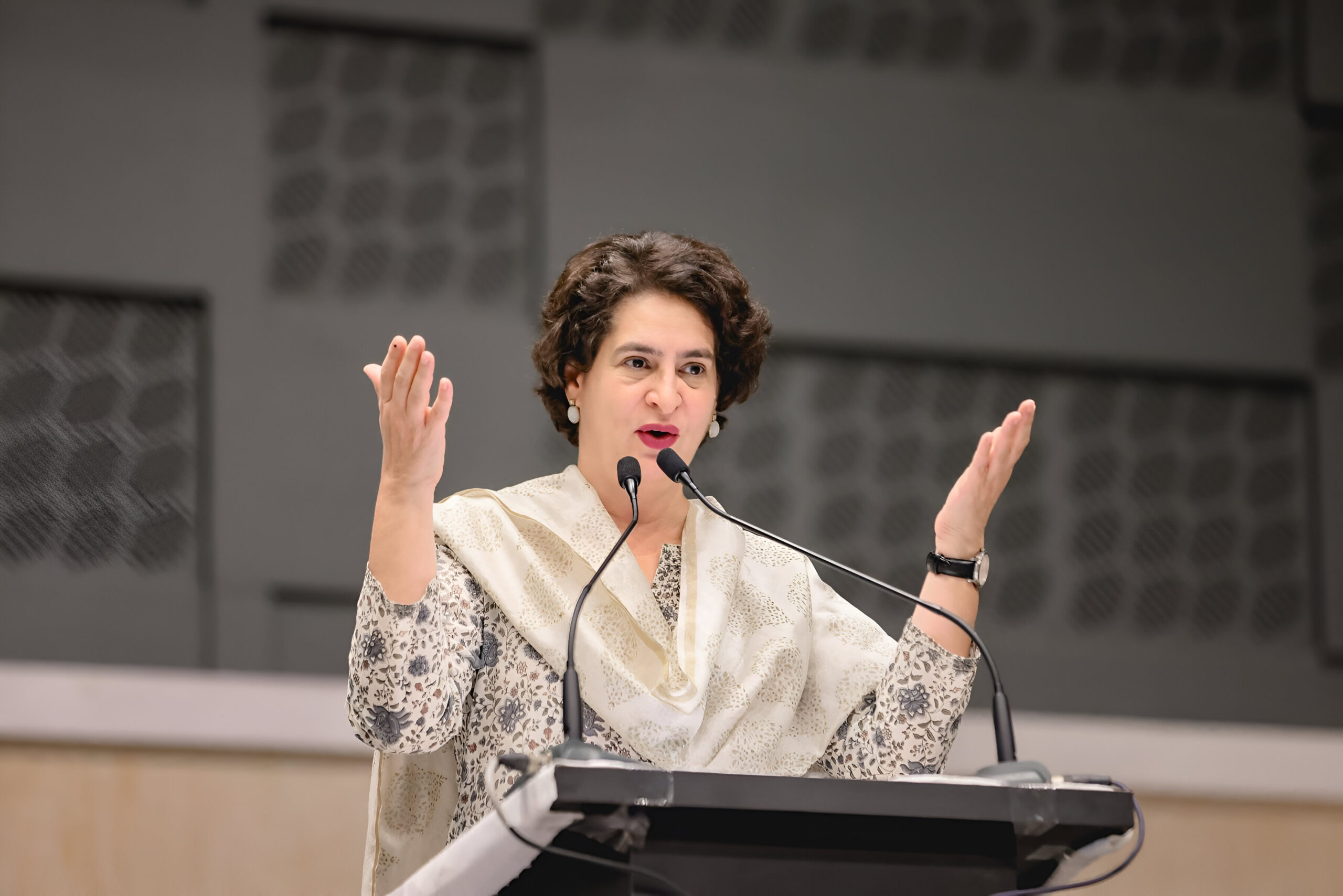
Now, let’s talk about Priyanka Gandhi’s explosive remark. In a public statement that resonated widely, she declared that the resignation of the Manipur Chief Minister was “long overdue.” This isn’t just a casual comment—it’s a pointed critique, laden with political significance.
Why did she say that? At its core, her statement reflects a deep-seated belief that the state’s leadership had failed to meet the expectations of the people. By describing the resignation as “long overdue,” Priyanka Gandhi is essentially arguing that the dysfunction and mismanagement in Manipur had been allowed to persist for far too long. She’s calling out a failure on multiple levels—administrative, political, and ethical.
Consider this: if you’re in a situation where repeated mistakes are being made and no corrective action is taken, eventually someone has to step in and say, “Enough is enough!” That’s precisely the sentiment behind her words. It’s a rallying cry for accountability and reform, a demand that the leadership must change if the state is to overcome its persistent challenges.
Political Ramifications: What Does This Mean for Manipur?
The implications of such a high-profile remark cannot be overstated. In the world of politics, words have the power to shape narratives and influence public opinion. Priyanka Gandhi’s declaration has the potential to alter the political dynamics in Manipur significantly.
For one, it reinforces the idea that political accountability is paramount. When a leading figure from a major national party like the Congress speaks out so forcefully, it sends a strong message to both the current government and the electorate: change is needed, and it’s long overdue. This could galvanize opposition forces and empower citizens who have been frustrated with the status quo.
Moreover, the statement might set a precedent for how political accountability is addressed in the state. It opens the door for further scrutiny of the decisions made by the previous administration and could lead to a renewed push for transparency and effective governance. In a way, it’s like a spark that has the potential to ignite a much larger movement—a movement aimed at overhauling a system that many believe is broken.
Public Reactions: Voices from the Ground
Let’s not forget the people of Manipur, whose daily lives are directly impacted by the state’s governance. The public reaction to both the resignation and Priyanka Gandhi’s statement has been a mix of relief, frustration, and cautious optimism.
Many citizens, tired of recurring issues and unfulfilled promises, have welcomed the resignation as a necessary change. They view it as an opportunity for new leadership to emerge—one that is more in tune with the needs and aspirations of the people. For them, Priyanka Gandhi’s words are a validation of their long-held belief that the previous administration had outstayed its welcome.
However, there are also those who remain skeptical. Some argue that while the resignation might open the door for change, it also creates uncertainty in an already volatile political landscape. They worry about the potential power struggles that could ensue and the possibility that the same issues might persist under new leadership. It’s like tearing down an old building without a clear plan for reconstruction—the void left behind can sometimes be as challenging to fill as the problems that existed before.
The Role of Political Parties: Beyond the Resignation
The fallout from the Chief Minister’s resignation isn’t limited to just one person stepping down—it has wider ramifications for political parties in Manipur. The Congress party, for instance, has seized upon this moment to critique the incumbent administration and to call for systemic reforms. Priyanka Gandhi’s remarks are not isolated; they are part of a broader narrative that the party is pushing, one that emphasizes accountability, transparency, and the need for a fresh political start.
Opposition parties are likely to use this moment to consolidate their positions and to demand that the new leadership addresses the issues that have long plagued the state. On the other hand, the ruling party now faces the formidable task of managing the transition while also reassuring the public that the problems of the past will not be repeated.
This period of transition is akin to the calm before a storm. Political analysts predict that the coming months will be critical in determining the future direction of Manipur’s governance. Will this resignation mark the beginning of a long-awaited turnaround, or will it merely be a temporary blip in an ongoing cycle of political instability? Only time will tell.
Impact on Governance and Policy Reforms
A key area of interest following the resignation is the potential for meaningful policy reforms. When a leadership change occurs, it’s an opportunity to reassess existing policies, address longstanding issues, and implement new strategies aimed at fostering growth and stability.
Many experts believe that this could be a turning point for Manipur. The resignation might pave the way for reforms in critical sectors such as infrastructure, education, and healthcare—areas that have been the subject of much public criticism. The hope is that the new leadership will not only bring fresh ideas but will also be more responsive to the needs of the people.
Think of it as a garden that has been neglected for years. The resignation is like the first rain after a long drought—there is hope that it will nourish the soil and lead to a blossoming of new growth. For the citizens of Manipur, these potential changes represent a beacon of hope, a chance to see real improvements in their daily lives.
Challenges Ahead: The Road to Recovery
Despite the optimism, the road ahead is fraught with challenges. The transition period following the resignation is a critical time for the state. Political infighting, power struggles, and the possibility of delays in implementing reforms are all real concerns that could undermine the promise of change.
One of the biggest challenges will be ensuring that the new leadership remains accountable to the people. In many cases, political transitions have led to a temporary lull in accountability, with power becoming concentrated in the hands of a few. To prevent this, it is essential that robust mechanisms are put in place to ensure transparency and public participation in the decision-making process.
Furthermore, rebuilding trust with the public is no easy task. Years of perceived mismanagement and unfulfilled promises have left a mark on the collective psyche of the people. Overcoming this skepticism will require consistent effort, clear communication, and tangible results. It’s a bit like trying to repair a broken bridge—you need strong materials, careful planning, and time to restore what was once solid and dependable.
The Role of Media and Public Discourse
In any democratic society, the media plays a crucial role in shaping public discourse and holding power to account. The resignation and the subsequent statements by political leaders, including Priyanka Gandhi, have dominated news cycles and social media discussions. Journalists and commentators are busy dissecting every aspect of the event, from the reasons behind the resignation to its potential impact on the state’s future.
Media coverage in this context is not just about reporting facts—it’s about fostering a dialogue among citizens. It encourages public debate, raises important questions, and ultimately helps to shape the narrative that will drive future policy decisions. When influential voices like Priyanka Gandhi speak out, they amplify the call for change, prompting citizens to engage more deeply with the issues at hand.
In this sense, the media acts as both a mirror and a catalyst—it reflects the current state of affairs while also inspiring action and reform. For the people of Manipur, this heightened public discourse is a vital component of the recovery process. It ensures that the government remains under constant scrutiny and that the promise of accountability is not lost in the rush of political transitions.
Implications for Future Elections
Political developments of this magnitude often have a ripple effect on the electoral landscape. The resignation of a high-profile leader, combined with scathing remarks from influential figures like Priyanka Gandhi, can significantly alter voter sentiment. Opposition parties may find new momentum, while the ruling party might face a tougher battle to regain public trust.
Looking ahead to future elections, many political analysts suggest that this incident could be a game-changer. Voters, who have grown increasingly disillusioned with repeated promises and unmet expectations, may be more inclined to demand change at the ballot box. The current political transition offers an opportunity for parties to redefine their platforms, address past shortcomings, and present a compelling vision for the future of Manipur.
This electoral shift could be compared to a reset button being pressed—an opportunity to start fresh and rebuild a political system that truly reflects the will of the people. However, it also means that political leaders must be prepared for a period of intense scrutiny and competition, where every decision is judged not only on its merits but also on its ability to inspire confidence among the electorate.
Priyanka Gandhi’s Vision for Change
So, what exactly is Priyanka Gandhi advocating for with her statement? Beyond the immediate criticism of the past leadership, her remarks signal a broader vision for change—a vision that calls for a more accountable, transparent, and responsive government in Manipur. She emphasizes that the time for complacency is over, and that the state’s leadership must evolve to meet the demands of a new era.
Her call to action is not just directed at political elites but also at the citizens of Manipur. By urging for accountability and renewal, she is inspiring voters to be more engaged, to demand better governance, and to participate actively in the democratic process. It’s like igniting a spark that, with proper nurturing, could lead to a wildfire of positive change—a transformation that begins at the grassroots level and reverberates throughout the state.
Reflections on Democratic Values
At its heart, the controversy surrounding the resignation and the subsequent commentary is a reflection of the enduring struggle to uphold democratic values. Democracy is not a static entity; it is a dynamic process that requires constant vigilance, adaptation, and, sometimes, radical change. When leaders fail to live up to the promises of transparency and accountability, it is the duty of the public and its representatives to demand better.
Priyanka Gandhi’s assertion that the resignation was “long overdue” is a call for introspection—a reminder that democracy works best when it is inclusive, responsive, and rooted in the needs of its people. For Manipur, a state that has weathered many storms, this moment serves as both a challenge and an opportunity: a challenge to address past failures and an opportunity to build a more robust, resilient future.
Conclusion: A Turning Point for Manipur?
In wrapping up our discussion, the resignation of the Manipur Chief Minister and Priyanka Gandhi’s emphatic statement mark a significant turning point in the state’s political journey. While the full impact of these events will unfold over time, one thing is clear: the call for accountability and change is louder than ever. The people of Manipur deserve leadership that listens, adapts, and acts in their best interests.
As we look to the future, it remains to be seen how these developments will reshape the political landscape. Will this be the catalyst for the long-overdue reforms that many have been waiting for, or will it merely be a fleeting moment in a cycle of political instability? Only time will tell. What is undeniable, however, is that this is a moment of reckoning—a moment when the voices demanding change are impossible to ignore.
In the end, the health of a democracy is measured not just by its institutions, but by the active participation of its citizens. As Manipur navigates this challenging period, the hope is that every setback becomes a stepping stone towards a brighter, more accountable future.
Frequently Asked Questions (FAQs)
- Who is Priyanka Gandhi and what did she say about the Manipur CM’s resignation?
Priyanka Gandhi is a prominent leader in the Congress party known for her vocal stance on democratic reforms. She stated that the resignation of the Manipur Chief Minister was “long overdue,” critiquing the previous administration for its failure to address longstanding issues. - What were the key factors that led to the CM’s resignation in Manipur?
The resignation came after years of mounting public dissatisfaction, allegations of mismanagement, internal party disputes, and unfulfilled promises that contributed to a loss of trust in the state government. - How might this resignation impact the political landscape in Manipur?
The resignation is expected to usher in a period of political transition, potentially paving the way for fresh leadership and systemic reforms. It could also influence voter sentiment in future elections, with a renewed demand for accountability and transparency. - What are the potential challenges following the resignation and the call for change?
Key challenges include managing the transition smoothly, ensuring that new leadership addresses existing issues effectively, and preventing further political instability. Rebuilding public trust and enacting meaningful reforms will be critical. - How can this moment be seen as an opportunity for democratic renewal in Manipur?
By highlighting the need for accountability and proactive governance, this moment serves as a wake-up call. It offers a chance to implement policy reforms, strengthen democratic institutions, and empower citizens to actively participate in shaping the future of Manipur.