Manipur: IDPs Stage Black Flag Protests on Independence Day Over Prolonged Displacement
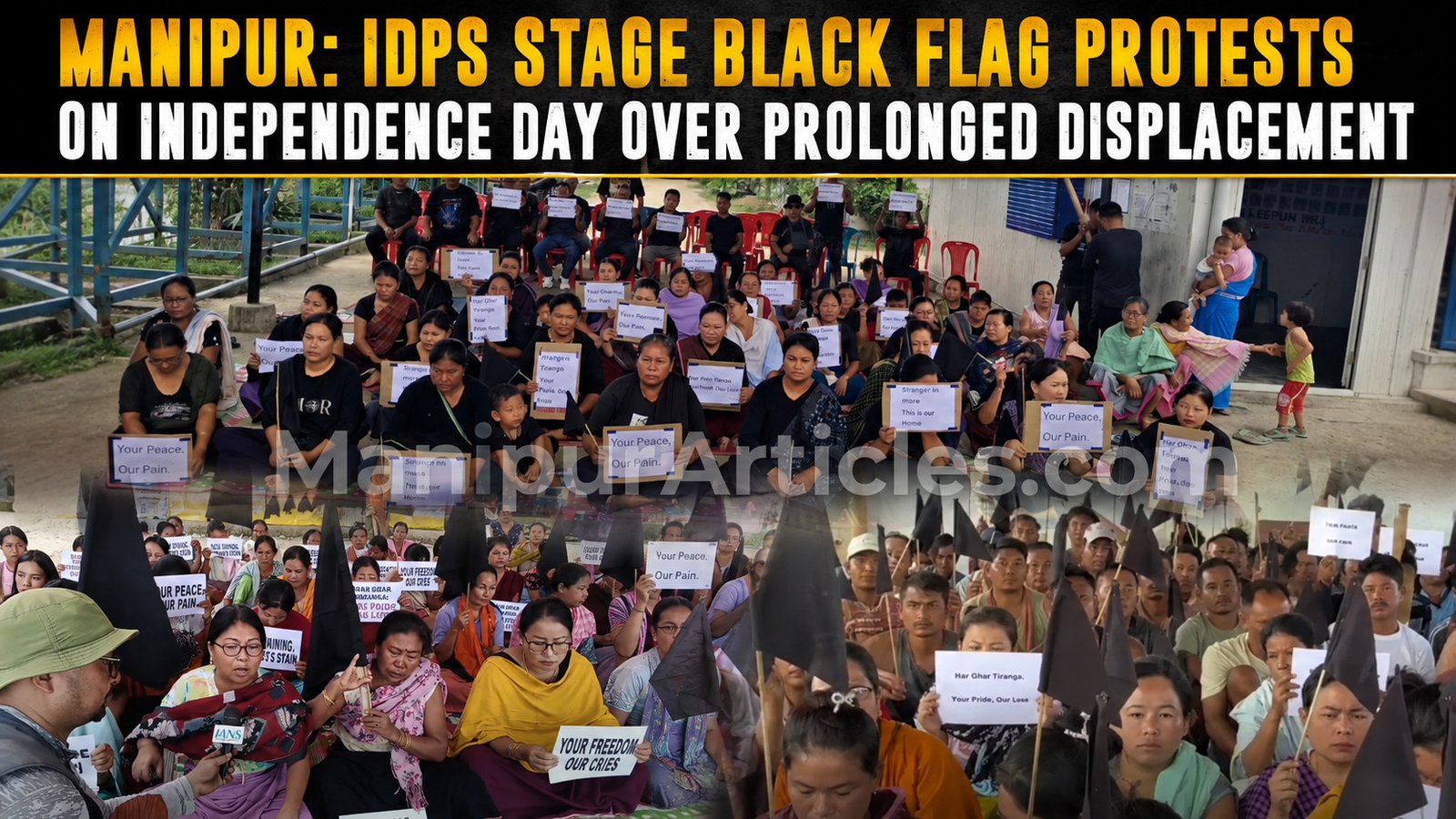
Imphal, August 16: Internally displaced persons (IDPs) in Manipur staged protests with black flags on Independence Day, highlighting their continuing concerns over safety, rehabilitation, housing and livelihood opportunities nearly three years after the ethnic violence that began in May 2023.
Several displaced families across relief camps reportedly joined demonstrations on August 15, calling for a permanent solution to their displacement and improved conditions for those unable to return home.
IDPs Raise Concerns Over Safety and Rehabilitation
Chief Minister Yumnam Khemchand Singh acknowledged the concerns raised by displaced people after meeting a group of IDPs at the Secretariat.
The Chief Minister said he was deeply moved by their situation, particularly after hearing from residents of an area bordering Churachandpur district who said they were able to visit their homes only during the day.
According to the Chief Minister, the residents told him that they did not feel safe staying in their homes overnight.
The issue of security remains one of the major obstacles preventing many displaced families from returning to their original places of residence.
More Than 43,000 IDPs Still in Relief Camps
According to data from the Manipur Home Department, more than 43,000 internally displaced persons are currently living in relief camps spread across nine districts.
The total number of people displaced by the conflict since May 2023 has crossed 58,000, highlighting the scale of the humanitarian challenge facing the state.
Many displaced families have remained away from their homes for an extended period, with uncertainty surrounding their permanent rehabilitation and return.
Black Flags Raised Across Relief Camps
IDPs in several relief camps reportedly hoisted black flags on August 15 to register their protest during Independence Day celebrations.
Displaced families at locations including Sajiwa, Sawombung and Akampat also staged demonstrations.
The protesters called for a permanent resolution to their displacement and demanded conditions that would allow them to safely return to their homes.
Some displaced people also expressed dissatisfaction with the “Har Ghar Tiranga” campaign, pointing out that they no longer have homes to return to.
The protests reflected the frustration among families who have spent years living away from their original homes.
Livelihood Remains Another Major Challenge
Apart from security concerns, the Chief Minister acknowledged that displaced people are also facing difficulties in finding sustainable livelihood opportunities.
For families who have lost access to their homes, farmland, businesses and other sources of income, prolonged displacement has created significant economic challenges.
The Chief Minister said people affected by crises experience similar pain and hardship, while emphasising the need to address the concerns of displaced communities.
Churachandpur Accounts for Large Displaced Population
Churachandpur district has one of the largest displaced populations in the state.
According to the figures provided, around 33,000 displaced people are linked to the district.
Of these, approximately 15,000 are staying in relief camps, while another 18,000 are living outside formal relief facilities.
The figures underline the complex nature of rehabilitation in Manipur, where many displaced families are living in different locations rather than within designated camps.
Return Home Depends on Security
For many IDPs, returning home remains closely linked to the restoration of a sense of security.
The concerns raised by residents who can visit their homes during the daytime but do not feel safe staying overnight demonstrate the continuing challenges surrounding rehabilitation and resettlement.
Without adequate security arrangements and confidence-building measures, many families remain reluctant to permanently return.
Long-Term Rehabilitation Remains a Major Issue
The prolonged displacement has created challenges extending beyond temporary shelter.
IDPs require access to housing, education, healthcare, employment, livelihoods and basic public services, in addition to physical safety.
The latest protests therefore highlight the demand for a comprehensive rehabilitation strategy rather than temporary relief arrangements.
For displaced families, the issue is not simply about returning to a particular location but also about being able to rebuild their lives with dignity and security.
Independence Day Protests Highlight Humanitarian Crisis
The black flag demonstrations on Independence Day brought renewed attention to the humanitarian consequences of the Manipur conflict.
While the state government used the Independence Day platform to appeal for mutual trust, peace, justice and dignity, displaced families used the occasion to highlight the difficulties they continue to face.
The contrasting messages underline the gap between the government’s broader peace and development objectives and the immediate concerns of people who remain displaced.
With more than 43,000 people still living in relief camps, finding a durable solution to displacement remains one of the most pressing challenges for Manipur.
Disclaimer: The figures on displaced persons and relief-camp residents are based on the Manipur Home Department data cited in the information provided. Individual accounts and allegations concerning safety and rehabilitation represent the concerns expressed by displaced persons and have not been independently verified.