Manipur: CorCom rejects ethnic homelands, Warns Against Communal Politics
Imphal, Manipur: The Coordination Committee (CorCom), an umbrella body comprising six banned valley-based insurgent organisations, has opposed the creation of ethnic or communal homelands in Manipur, stating that such divisions are neither sustainable nor beneficial for the state’s future.
In a statement issued by its Media Coordinator, M. Shak-Hen, on the occasion of CorCom’s 15th Foundation Day on July 8, the organisation said that lasting peace and development can only be achieved through peaceful coexistence among all communities. It urged people in Manipur, also referred to by the group as Kangleipak, to move away from communal politics and avoid further ethnic polarisation, claiming that identity-based divisions would ultimately affect all indigenous communities.
The statement also conveyed greetings to the people of Manipur, various revolutionary organisations, and communities across the WESEA (West South East Asia) region. CorCom paid tribute to individuals it described as martyrs of its movement.
Reiterating its long-held political views, the organisation alleged that several former princely states, including Manipur, Hyderabad, Goa, Jammu & Kashmir, and Sikkim, were incorporated into the Indian Union through military action following the end of British colonial rule. These claims reflect the organisation’s stated position.
CorCom further criticised the continued deployment of security forces in the Northeast and the implementation of the Armed Forces (Special Powers) Act (AFSPA), alleging that the legislation violates international legal standards.
The group also raised concerns over the government’s economic and agricultural policies, particularly the Manipur government’s memoranda of understanding (MoUs) with Patanjali Foods Limited and Godrej Agrovet Limited for oil palm cultivation under the National Mission on Edible Oils–Oil Palm (NMEO-OP).
According to CorCom, approximately 66,652 hectares across six districts have been earmarked for oil palm plantations. The organisation claimed that large-scale cultivation could have adverse environmental consequences, citing examples from Indonesia and Malaysia where extensive oil palm farming has been associated with ecological degradation.
The statement further alleged that indigenous communities had not been provided with free, prior, and informed consent before the proposed expansion of oil palm cultivation and warned that forests and agricultural land could face long-term environmental impacts if the project proceeds without adequate safeguards.
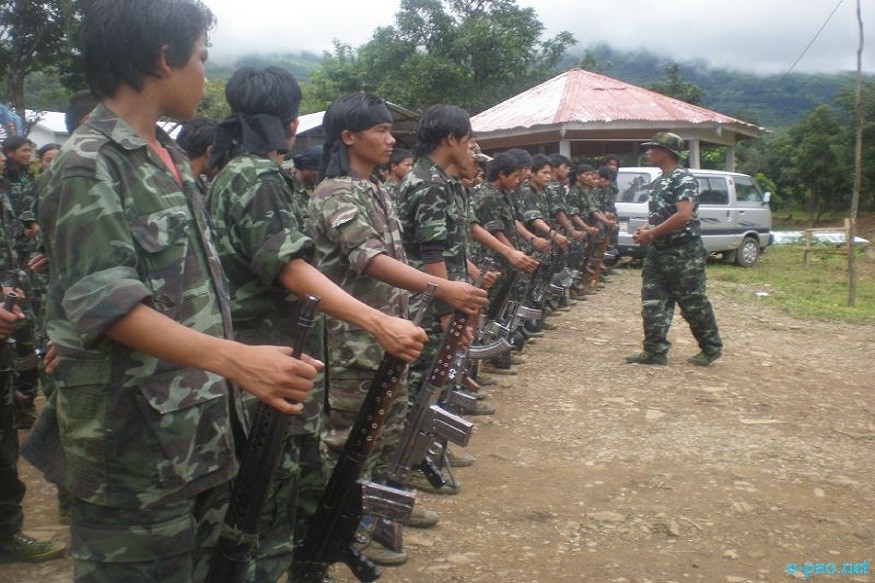
CorCom is an umbrella organisation comprising six banned insurgent groups: the Kangleipak Communist Party (KCP), Kanglei Yawol Kanna Lup (KYKL), People’s Revolutionary Party of Kangleipak (PREPAK), PREPAK (Progressive), the Revolutionary People’s Front (RPF), the political wing of the People’s Liberation Army (PLA), and the United National Liberation Front (UNLF).
The statement was issued as part of the organisation’s Foundation Day observance and reflects the group’s views on political, social, and environmental issues concerning Manipur.