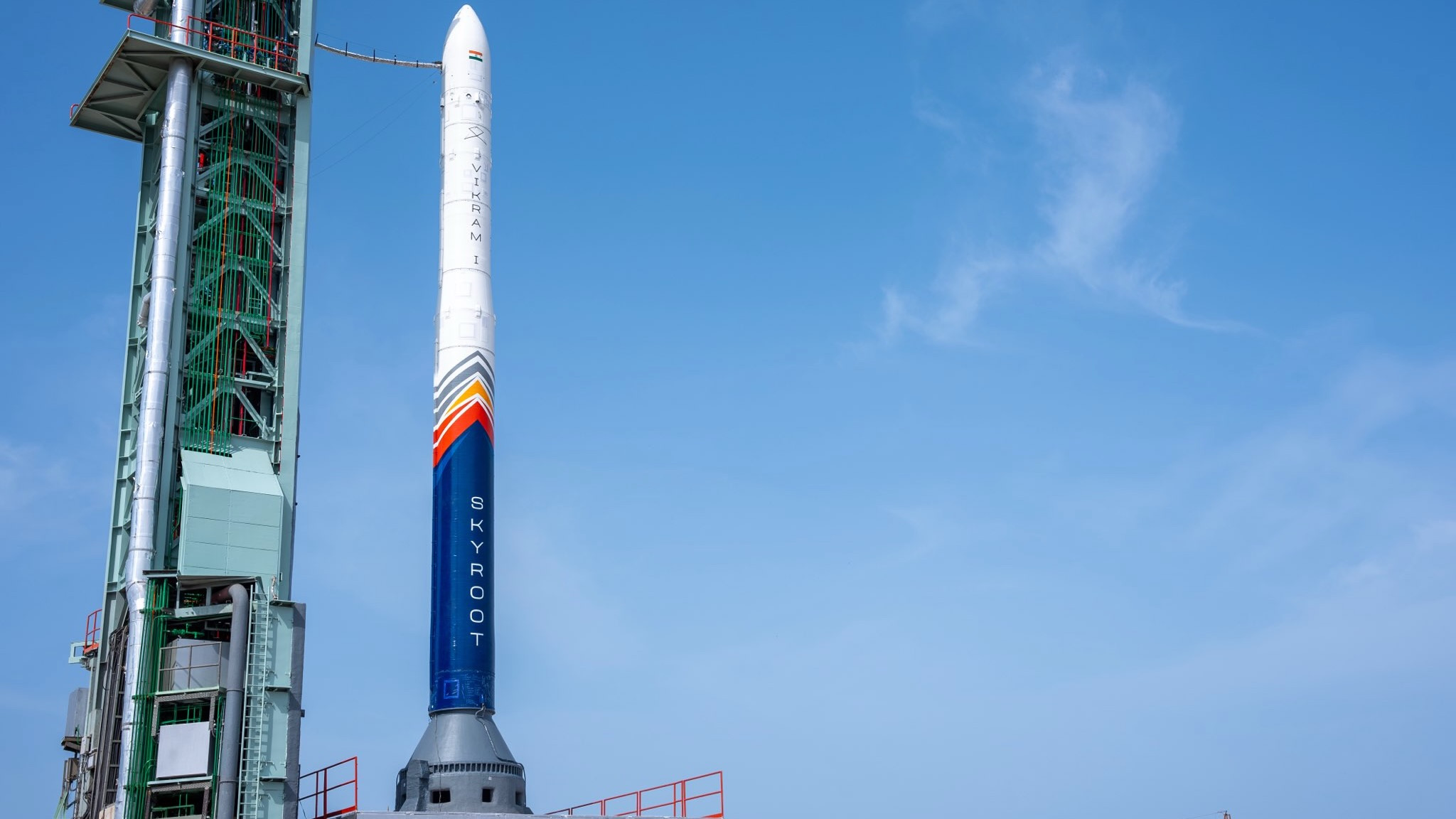
Skyroot’s Vikram-1 Becomes India’s First Privately Developed Orbital Rocket to Launch into Space successfully blasted off at 12:05:30 pm
Sriharikota, July 18: India achieved a historic milestone in its space journey as Skyroot Aerospace’s Vikram-1 successfully lifted off from the Satish Dhawan Space Centre (SDSC), Sriharikota, becoming the country’s first privately developed orbital-class rocket to attempt a mission to space.
The landmark mission, named “Aagaman”, marks the formal entry of India’s private space industry into the global orbital launch market, opening a new chapter in the country’s commercial space ambitions.
The launch, originally scheduled for 11:30 am, was briefly delayed after mission controllers placed the countdown on a planned hold. Following final technical checks, Vikram-1 successfully blasted off at 12:05:30 pm, drawing celebrations from scientists, engineers, and space enthusiasts.
Developed by Hyderabad-based Skyroot Aerospace, the seven-storey-tall Vikram-1 is an advanced orbital launch vehicle built using an all-carbon composite structure. It is powered by three solid-fuel propulsion stages along with a liquid-fuel orbital adjustment stage and incorporates several indigenously developed technologies, including 3D-printed rocket engines and high-thrust solid rocket motors.
The launch vehicle is capable of placing satellites weighing up to 350 kilograms into Low Earth Orbit (LEO). During its maiden mission, the rocket is targeting an orbit of approximately 450 kilometres at a 60-degree inclination.
Mission Aagaman is carrying multiple technology demonstration payloads from Grahaa Space, Cosmoserve, DCubed, and Skyroot’s SCOPE platform. It also includes Cosmos Diamonds’ “Cosmic Bloom” artwork and a unique micro-art installation featuring miniature sculptures of Sir C.V. Raman, Dr. Vikram Sarabhai, and Dr. A.P.J. Abdul Kalam.
Named in honour of Dr. Vikram Sarabhai, the father of India’s space programme, Vikram-1 builds on Skyroot’s earlier achievement with the successful Vikram-S suborbital mission launched in November 2022.
Ahead of the launch, Prime Minister Narendra Modi described the mission as a “historic new frontier” in India’s space journey. He said the mission reflects the innovation, determination, and entrepreneurial spirit of India’s youth and demonstrates the impact of reforms that have opened the country’s space sector to private participation.
The Prime Minister extended his best wishes to the Skyroot Aerospace team and encouraged citizens, especially young people, to witness the historic mission.
As a symbolic gesture, Vikram-1 is also carrying a commemorative postcard signed by Prime Minister Modi bearing the words “Vande Mataram”, along with hundreds of postcards carrying messages and aspirations from people across the world. The rocket additionally carries the signatures of Skyroot’s engineers, technicians, and team members who contributed to making India’s first private orbital launch possible.
The successful launch places Skyroot Aerospace among a select group of private companies worldwide capable of developing and launching orbital-class rockets, further strengthening India’s position in the rapidly expanding global space economy.